Views: 0 Author: Site Editor Publish Time: 2026-07-16 Origin: Site
Choosing the right flooring for a commercial project is no longer just about appearance. Today's architects, contractors, distributors, and property owners are looking for flooring that delivers long-term performance, minimizes maintenance costs, and creates lasting value.
For many years, laminate flooring has been one of the most popular choices because it offers realistic wood visuals, affordable pricing, and easy installation. It has become a common solution for homes, offices, retail stores, and light commercial environments.
However, commercial spaces are becoming more demanding than ever. Heavy foot traffic, rolling office chairs, frequent cleaning, and changing environmental conditions require flooring that can perform beyond the capabilities of traditional wood-based materials.
This is why MSPC flooring has become one of the fastest-growing innovations in the resilient flooring industry.
By combining a rigid mineral composite core with an advanced melamine surface, MSPC flooring is designed to provide exceptional durability while maintaining the natural beauty of wood.
So how does it compare with laminate flooring?
Is MSPC flooring simply another alternative, or is it a better long-term solution for modern commercial spaces?
Let's compare them from every important perspective.
MSPC stands for Melamine Stone Plastic Composite.
It is a next-generation rigid flooring solution developed for demanding residential and commercial applications.
Unlike traditional SPC flooring, MSPC incorporates a melamine-based decorative surface instead of a conventional PVC wear layer. This innovative construction combines the proven scratch resistance of melamine technology with the waterproof stability of a mineral composite core.
The result is a floor that offers an excellent balance between aesthetics, durability, and long-term performance.
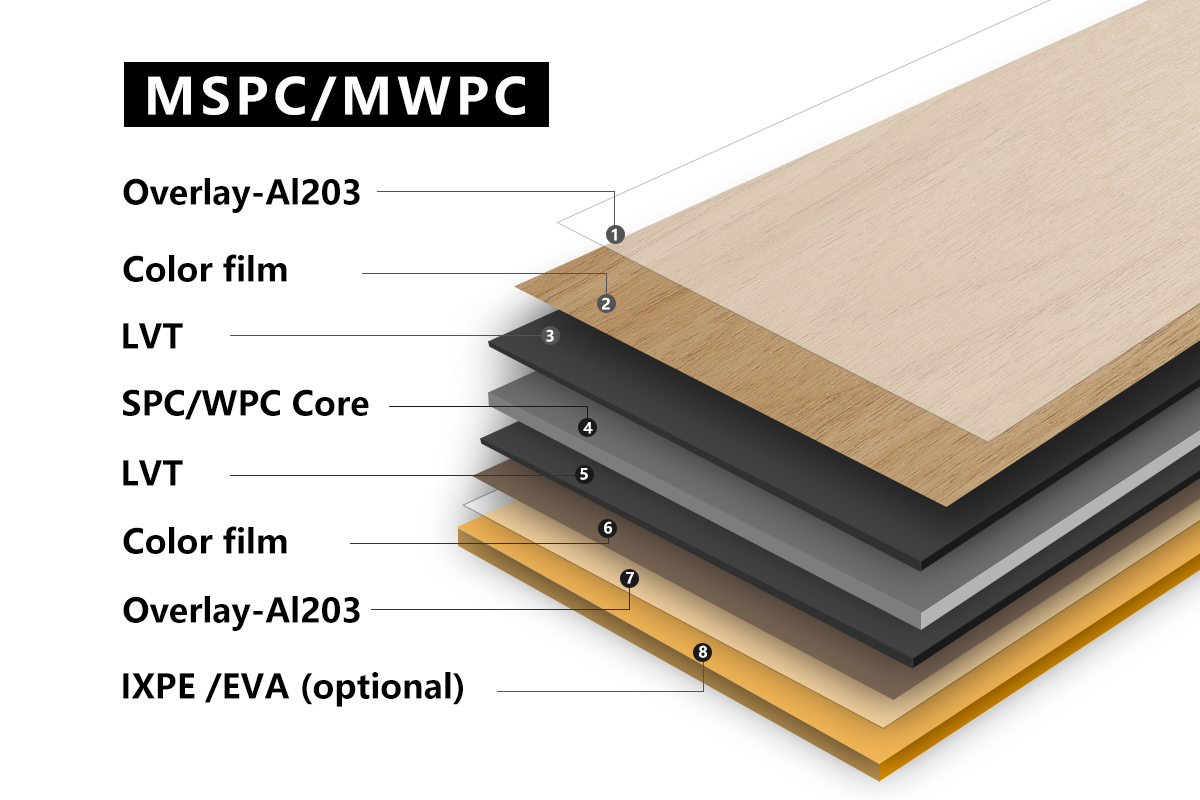
Typical MSPC flooring consists of:
Melamine wear surface
Decorative paper layer
Reinforcement layer
Mineral composite rigid core
Optional IXPE or EVA underlayment
Each layer plays a specific role in enhancing durability, comfort, and structural stability.
MSPC flooring has been developed to solve many of the challenges faced by commercial buildings.
Some of its most important advantages include:
Superior scratch resistance
Waterproof construction
Excellent dimensional stability
High impact resistance
Low maintenance requirements
Comfortable walking experience
Realistic wood and stone designs
These characteristics make MSPC flooring particularly suitable for projects where durability and appearance are equally important.
Laminate flooring has remained one of the world's most popular flooring products for decades.
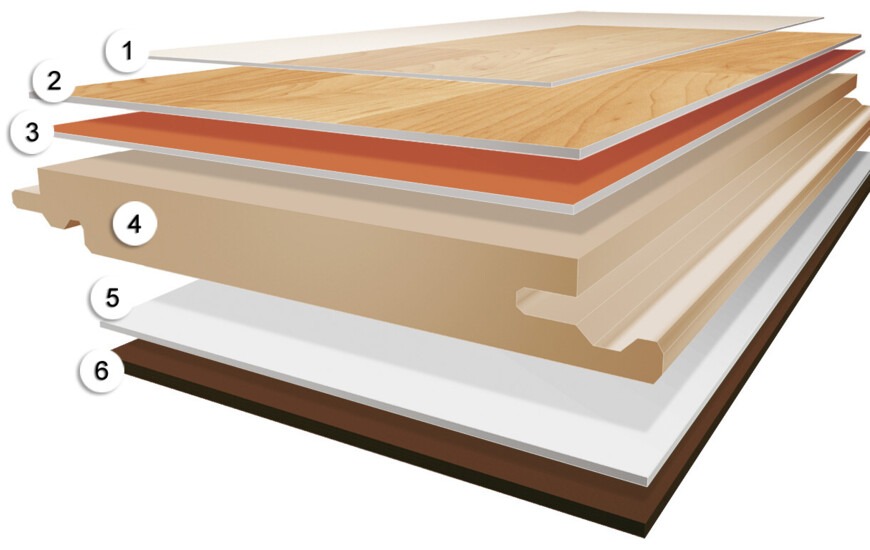
It consists of several compressed layers, including:
Protective wear layer
Decorative printed paper
High-density fiberboard (HDF) core
Stabilizing backing layer
Thanks to advanced printing technology, laminate flooring can realistically reproduce the appearance of hardwood, stone, and other natural materials.
It is widely appreciated for its affordability and simple click-lock installation.
For many residential applications, laminate flooring continues to offer excellent value.
However, because its core is made primarily from compressed wood fibers, it behaves differently from mineral-based flooring products when exposed to moisture or extreme environmental conditions.
At first glance, both flooring products appear very similar.
Both can imitate natural wood.
Both are available in a wide variety of colors.
Both often feature floating installation systems.
The biggest differences are hidden inside.
The core determines how a floor performs throughout its lifetime.
Laminate flooring uses a high-density fiberboard core manufactured from compressed wood fibers.
MSPC flooring uses a rigid mineral composite core.
Think of it like comparing a sponge with a stone.
A sponge performs well in dry conditions, but once water enters, it changes shape.
A stone remains stable regardless of moisture.
This difference explains why MSPC flooring performs better in challenging commercial environments.
Surface protection directly affects the appearance of the floor after years of use.
Laminate flooring relies on aluminum oxide coatings to resist scratches and wear.
MSPC flooring combines melamine technology with advanced protective treatments that are specifically engineered for commercial applications.
The result is enhanced resistance to:
Surface scratches
Abrasion
Daily wear
Furniture movement
High pedestrian traffic
For businesses that want their interiors to maintain a premium appearance, this advantage becomes increasingly valuable over time.
Commercial flooring faces constant abuse every day.
Imagine the floor inside a busy office.
Office chairs roll back and forth hundreds of times.
Employees move filing cabinets.
Visitors walk in wearing high heels.
Cleaning equipment passes through every evening.
Now imagine this happening every day for several years.
The floor must continue looking professional despite this continuous wear.
MSPC flooring is specifically engineered for high-traffic environments.
Its melamine surface offers outstanding resistance to scratches and abrasion, helping preserve the floor's appearance for much longer than many traditional flooring materials.
This makes it an excellent choice for:
Corporate offices
Retail stores
Hotels
Educational facilities
Healthcare buildings
Even after years of heavy use, the surface maintains its attractive finish with minimal maintenance.
Laminate flooring also provides good scratch resistance, particularly premium products with high abrasion ratings.
For residential homes or low-traffic offices, this level of protection is often more than sufficient.
However, in demanding commercial environments, continuous rolling traffic and heavy furniture movement may eventually leave visible signs of wear.
For projects where long-term appearance is critical, MSPC flooring generally offers a stronger solution.
Water is one of the most common causes of flooring failure.
Commercial buildings encounter moisture every single day.
Coffee spills.
Wet umbrellas.
Rainwater at entrances.
Routine mopping.
Restaurant cleaning.
Hotel housekeeping.
Healthcare sanitation.
These situations require flooring that can tolerate moisture without compromising structural performance.
The mineral composite core used in MSPC flooring is waterproof.
Unlike wood-based materials, it does not absorb water or swell when exposed to moisture.
This makes MSPC flooring particularly suitable for:
Hotels
Restaurants
Retail stores
Office buildings
Schools
Healthcare facilities
Even in environments where wet cleaning is performed daily, MSPC flooring maintains its structural stability.
Modern laminate flooring has become increasingly moisture-resistant.
Many premium products can withstand occasional spills when cleaned promptly.
However, because the core remains wood-based, prolonged exposure to standing water may eventually cause swelling or edge deformation.
For this reason, laminate flooring is generally recommended for dry interior spaces rather than moisture-prone commercial environments.
Commercial flooring must do more than resist scratches. It also needs to withstand impacts from daily operations.
In busy commercial environments, floors are constantly exposed to:
Heavy office furniture
Rolling filing cabinets
Shopping carts
Delivery trolleys
Suitcases in hotel corridors
Maintenance equipment
Every impact places stress on the flooring structure.
Thanks to its rigid mineral composite core, MSPC flooring distributes pressure more evenly across the plank.
This helps reduce the risk of dents, deformation, or structural damage caused by heavy objects.
The stable construction also improves performance in open commercial areas where floors experience continuous loading throughout the day.
Laminate flooring performs well under normal residential conditions and light commercial use.
However, because the core is made from compressed wood fibers, repeated heavy impacts may gradually affect its structural integrity, especially if moisture is also present.
For projects with demanding traffic conditions, MSPC flooring generally provides greater long-term confidence.
Installation efficiency affects both project schedules and labor costs.
Fortunately, both flooring systems are designed for relatively quick installation.
Most MSPC flooring and laminate flooring products feature click-lock systems that allow planks to connect securely without nails or glue.
This provides several advantages:
Faster installation
Lower labor costs
Easier replacement of damaged planks
Cleaner construction sites
Reduced project downtime
For commercial renovations where businesses need to reopen quickly, these benefits are especially valuable.
Both flooring types require a clean, dry, and level subfloor.
However, MSPC flooring's rigid core can generally tolerate minor imperfections better than traditional laminate flooring.
Proper preparation remains essential for achieving optimal performance and extending the lifespan of either flooring system.
One of the most overlooked factors when choosing commercial flooring is maintenance.
A floor with a low purchase price may become expensive if it requires frequent repairs or intensive care.
MSPC flooring is designed for simple maintenance.
Routine cleaning usually involves:
Sweeping
Vacuuming
Damp mopping
Prompt removal of spills
No waxing or polishing is typically required.
This makes MSPC flooring an excellent choice for facilities where cleaning efficiency directly affects operating costs.
Laminate flooring is also easy to maintain, but excessive water should be avoided during cleaning to protect the wood-based core.
Over the life of a commercial building, maintenance costs often exceed the initial purchase price of the flooring.
MSPC flooring can help reduce these costs by offering:
Excellent wear resistance
Waterproof performance
Fewer repairs
Longer service life
For building owners focused on lifecycle value, these advantages can translate into significant long-term savings.
Price is always an important consideration, but smart purchasing decisions go beyond the initial investment.
A flooring solution should be evaluated based on its total cost of ownership rather than its purchase price alone.
Laminate flooring generally has a lower upfront cost, making it an attractive choice for residential projects and budget-conscious renovations.
MSPC flooring is positioned as a premium product, reflecting its advanced construction and enhanced performance.
When evaluating flooring over ten or fifteen years, additional factors become more important:
Maintenance expenses
Repair frequency
Replacement costs
Downtime during renovations
Overall durability
For commercial spaces that experience continuous daily use, investing in a more durable flooring solution often results in better long-term value.
Neither flooring product is universally better. The ideal choice depends on the project requirements.
Commercial offices
Hotels and resorts
Retail stores
Shopping centers
Healthcare facilities
Educational buildings
Restaurants
High-traffic public spaces
Areas exposed to frequent moisture
MSPC flooring is particularly suitable when durability, waterproof performance, and long service life are top priorities.
Residential living rooms
Bedrooms
Home offices
Apartments
Low-traffic commercial spaces
Budget-friendly interior renovations
Laminate flooring remains an excellent option for dry environments where affordability and appearance are the primary considerations.
Feature | MSPC Flooring | Laminate Flooring |
|---|---|---|
Core Material | Mineral Composite Core | High-Density Fiberboard (HDF) |
Waterproof | ★★★★★ | ★★☆☆☆ |
Scratch Resistance | ★★★★★ | ★★★★☆ |
Impact Resistance | ★★★★★ | ★★★☆☆ |
Moisture Stability | Excellent | Moderate |
Commercial Durability | Excellent | Good |
Residential Use | Excellent | Excellent |
Maintenance | Very Easy | Easy |
Best for High-Traffic Areas | ✔ | Limited |
Long-Term Value | Excellent | Good |
Commercial buildings are expected to last for decades, and the flooring should support that long-term vision.
Today's project owners are no longer focused solely on finding the lowest purchase price. Instead, they evaluate flooring based on its ability to reduce maintenance, minimize disruptions, and maintain an attractive appearance over time.
This shift explains why MSPC flooring is gaining attention across industries.
By combining waterproof performance, superior scratch resistance, excellent dimensional stability, and commercial-grade durability, MSPC flooring provides a practical solution for modern business environments.
For distributors, it also represents an opportunity to offer customers a premium alternative that stands apart from traditional flooring products.
Both MSPC flooring and laminate flooring have earned their place in today's flooring market.
Laminate flooring continues to be a reliable and cost-effective option for residential projects and light commercial applications where moisture exposure is limited.
MSPC flooring, on the other hand, is designed for environments that demand higher performance.
Its waterproof mineral composite core, advanced melamine surface, exceptional scratch resistance, and long-term durability make it an ideal choice for offices, hotels, retail stores, healthcare facilities, and other high-traffic commercial spaces.
Ultimately, the right flooring depends on your project's priorities.
If affordability for dry residential areas is your main concern, laminate flooring remains a solid option.
If you're looking for a flooring solution that combines premium aesthetics with commercial-grade performance and long-term value, MSPC flooring is an investment worth considering.
Generally, yes. MSPC flooring is engineered for demanding commercial environments and typically offers better scratch resistance, impact resistance, and waterproof performance.
Yes, laminate flooring is suitable for light commercial applications. However, for areas with heavy foot traffic or frequent moisture exposure, MSPC flooring is often a more durable choice.
MSPC flooring features a waterproof mineral composite core, making it suitable for moisture-prone environments such as hotels, offices, restaurants, and healthcare facilities.
Both products are relatively easy to clean, but MSPC flooring generally requires less concern about water exposure during routine maintenance.
For high-traffic commercial projects, MSPC flooring often provides better long-term value due to its durability, reduced maintenance requirements, and longer service life.