
Views: 0 Author: Site Editor Publish Time: 2026-01-30 Origin: Site
For a long time, flooring manufacturing was judged by one simple metric: output.
How many square meters per day? How fast can the line run?
But as we approach 2026, that mindset is changing fast.
Today, the real question is not how much a factory can produce—but how intelligently it produces. Smart manufacturing and digitalization are quietly reshaping the flooring industry from the inside out, redefining quality, consistency, and reliability.
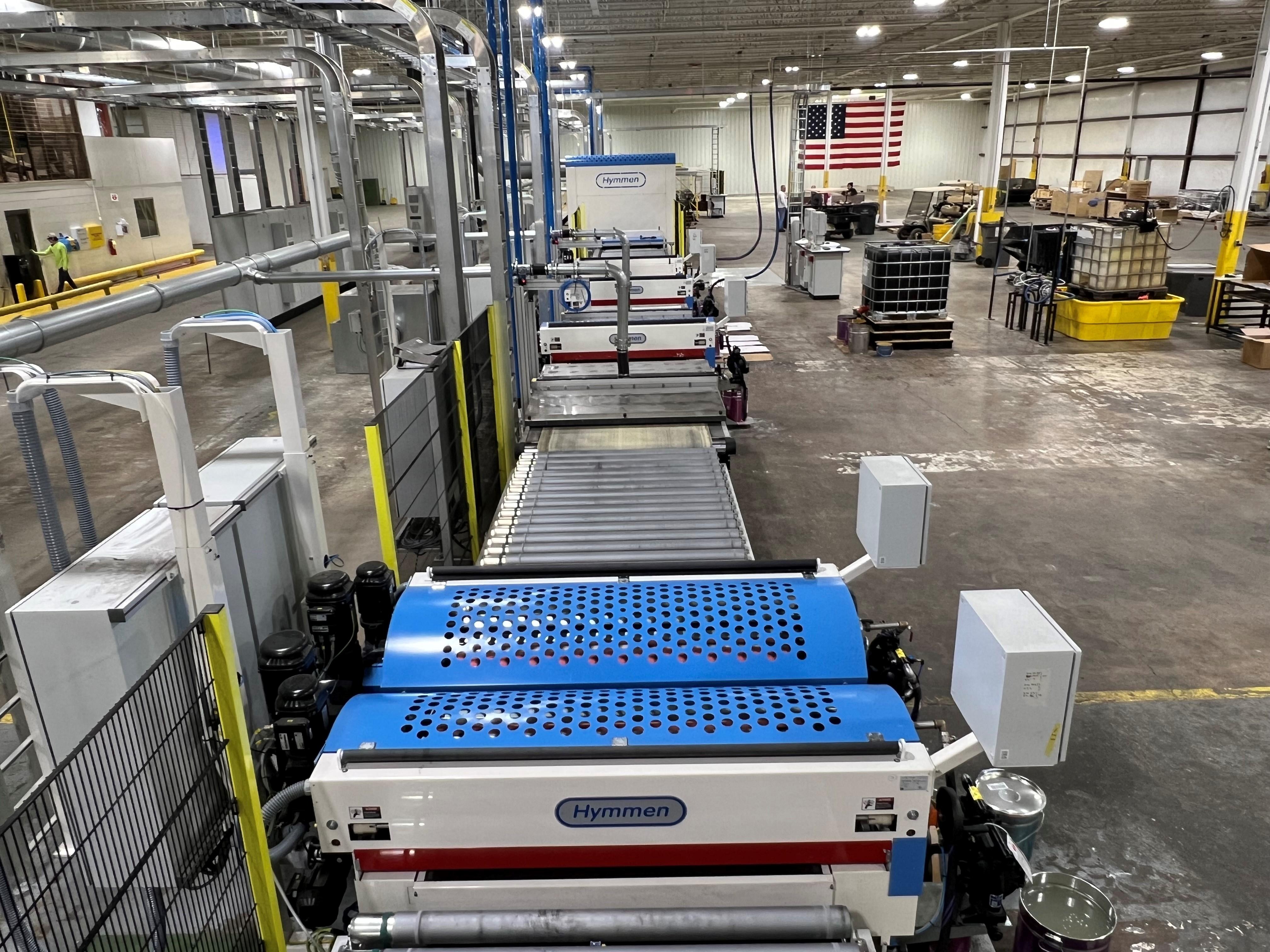
Smart manufacturing goes far beyond automation.
It refers to a connected production ecosystem where machines, sensors, software, and data work together to optimize every step of the manufacturing process.
In flooring, this means:
Real-time monitoring of production parameters
Automated defect detection
Data-driven decision-making
Predictive maintenance instead of reactive repairs
In short, factories are starting to think, not just run.
Digital transformation didn’t happen because it was fashionable.
It happened because the industry needed it.
Manufacturers face increasing pressure from:
Rising labor costs
Higher quality expectations
Tighter delivery schedules
More complex product structures
Without digital tools, maintaining consistency across large volumes becomes nearly impossible.

Quality control is one of the most dramatic areas of change.
Human inspectors are experienced—but they are also human. Fatigue, subjectivity, and inconsistency are unavoidable, especially in high-speed production environments.
Traditional inspection often detects problems after defects have already accumulated.
AI-based systems use cameras, sensors, and algorithms to detect:
Surface defects
Color deviations
Edge and locking system inconsistencies
Pattern alignment issues
These systems work continuously and objectively, identifying problems in real time and reducing waste before it spreads downstream.
Data is becoming the backbone of modern flooring factories.
Every parameter—temperature, pressure, speed, material flow—can be tracked, analyzed, and optimized.
Running a line faster means nothing if quality suffers. Smart factories focus on:
Stable output
Repeatable results
Predictable performance
This shift dramatically improves batch-to-batch consistency, which is critical for large commercial projects and long-term supply agreements.
Automation is often misunderstood as “labor replacement.” In reality, it’s more about labor optimization.
Smart manufacturing allows:
Skilled workers to focus on high-value tasks
Reduced dependence on manual adjustments
Lower error rates in repetitive operations
The result is not fewer people—but more effective teams.
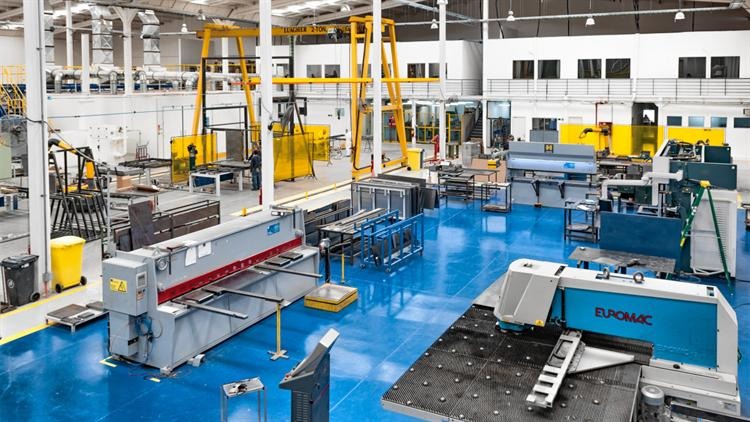
From a buyer’s perspective, manufacturing intelligence directly impacts supply chain stability.
Smart factories are better equipped to:
Predict equipment failures
Adjust production schedules quickly
Maintain consistent lead times
Handle demand fluctuations
In an uncertain global market, reliability becomes a competitive advantage.
Many buyers still evaluate suppliers based on samples and price alone. That approach is increasingly risky.
Smart manufacturing affects:
Product consistency over time
Warranty performance
Complaint rates
Long-term partnership reliability
In 2026, buyers who understand manufacturing intelligence make better sourcing decisions.
Digitalized production makes transparency possible.
Suppliers can provide:
Traceable production data
Consistent testing records
Clear quality benchmarks
This level of openness builds trust—especially in high-volume, multi-year contracts.
Implementing smart manufacturing is not without challenges:
High initial investment
Technical learning curves
System integration complexity
However, costs are decreasing, and proven ROI is accelerating adoption across the industry.
By 2026, the gap between digitalized and non-digitalized factories will be impossible to ignore.
Smart manufacturers will deliver:
More consistent products
Faster response times
Better quality assurance
Those who delay risk being left behind—not by technology, but by customer expectations.

Smart manufacturing is no longer an upgrade—it is the new baseline.
In the flooring industry of 2026, quality will be defined not only by materials and design, but by the intelligence of the factory behind them.


